Summary
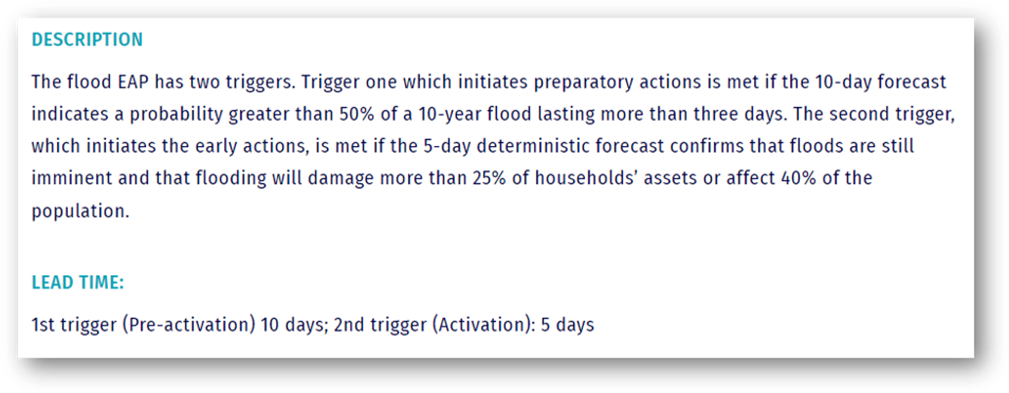
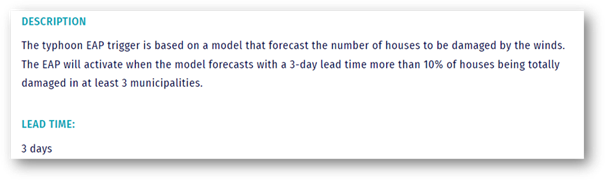
Forecasts and triggers are among key components of anticipatory action that will guide the National Society, the community or other practitioners to when and where early actions need to be implemented. For s/EAPs, when a pre-agreed threshold of a forecast is reached, the National Society activates the s/EAP and funds will be automatically dispersed.
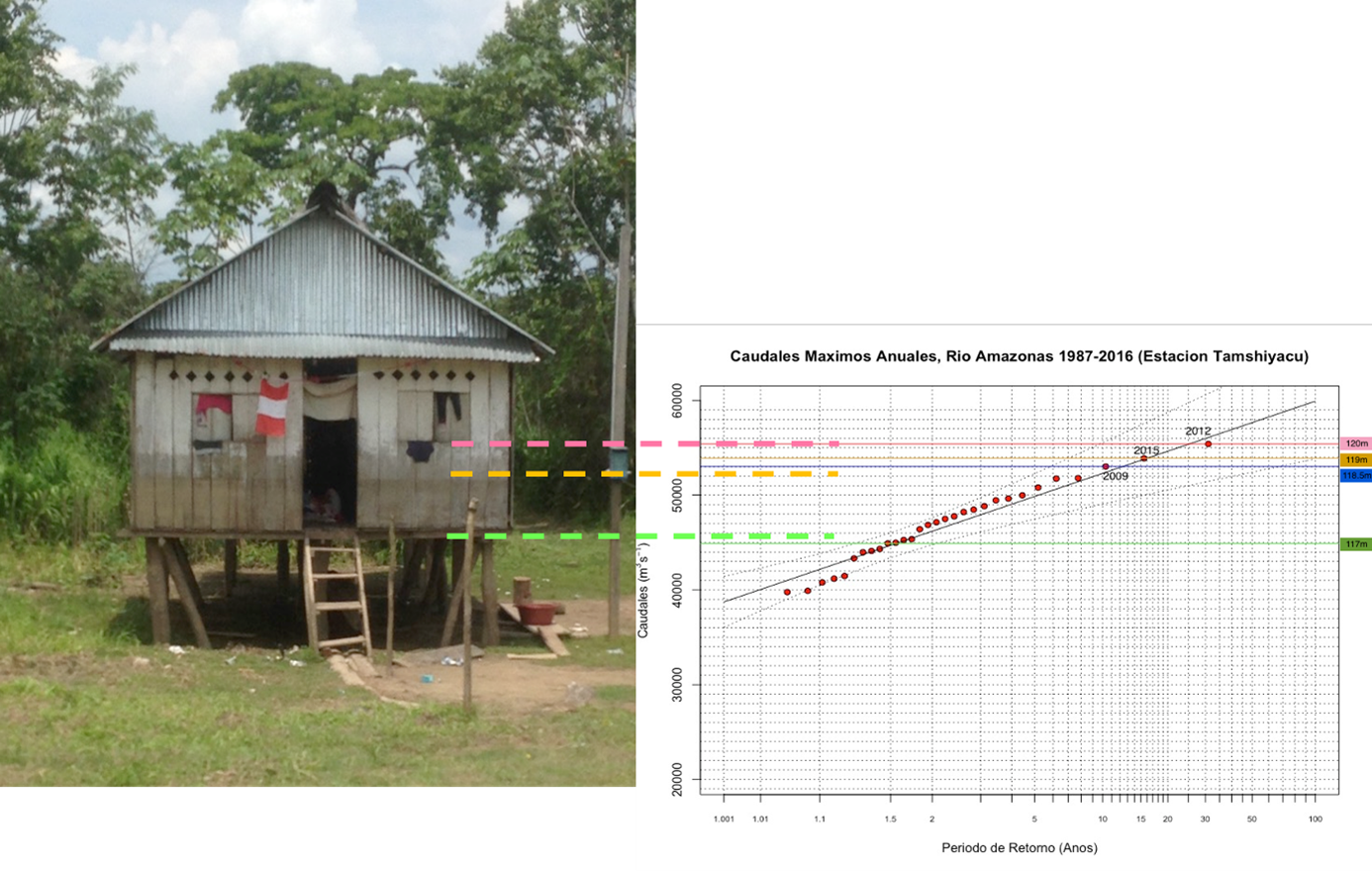
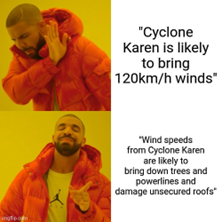
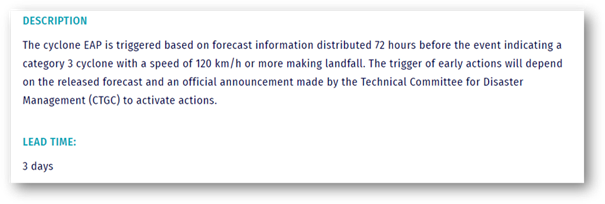
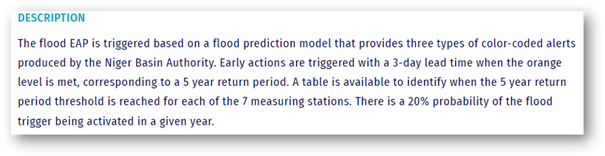
Anticipatory action is designed for those events that are predicted to have a severe impact exceeding the coping capacities of the people. Therefore, it is not enough to know what the forecasted windspeed will be. Instead, you must know whether the storm will cause impact. For this reason, as impact-based forecasts are not usually available the development of the trigger requires an understanding of past impacts that can be related to a certain hazard threshold, e.g. windspeed.
The methodology elaborated below can be applied and adapted for a variety of hazards. It is derived from work on weather-related hazards, such as floods, storms and droughts, but it can also be adapted to non-weather hazards, such as epidemics or locusts, if appropriate.
This chapter will guide you through the trigger development process from a technical perspective with a focus on trigger development for EAPs. It will also advise you on technical cooperation and share examples and good practices. However, many steps can be taken for the other approaches in a lighter touch depending on your available time and resources. You find guidance for this throughout the text and the specific guidance at the end of the Manual.
Please note that the development of the trigger often runs in parallel with the selection of the early actions, as the development of the s/EAP is an iterative process. For example, if the action is “evacuation”, you would select a different triggering forecast than if the action is “spread awareness about cholera risk”. Thus, some steps from chapter 7: Select your early actions are needed to advance with the trigger development.
In the video below, Catalina Jaime, expert on anticipatory action, climate and conflict, explains how to build upon a feasibility study, and complete a risk analysis.